Glaze Reactions
The background (matrix) glaze is hiAlk_Z3P_Z4E; the inlay design is
glazed with
Prior examples of this inlay glaze
are seen with high titanium matrix glazes
Here, the background glaze has slightly more silica than the glazes seen in
the prior notes,
Prior examples exhibited a black band of rutile crystal cluster into which
titanium had diffused. This
Generally, there are few intact crystals in the interaction region. Instead,
there are a great many
The matrix (i.e., background) glaze and inlay glaze overlap minimally before
firing. The width of the
The design is created by adhering a mask and then applying the main
glaze. After drying,
150 deg F an hour to 250 deg F
400 deg F an hour to 1800 deg F
300 deg F an hour to 2050 deg F
120 deg F an hour to 2310 deg F with a hold of 20 minutes at 2310 deg F
300 deg F an hour to 1850 deg F then a 2 hr hold at 1850 deg F
300 deg F an hour to 1750 deg F then a 1 hr hold at 1750 deg F
300 deg F an hour to 1700 deg F then a 3 hr hold at 1700 deg F
25 deg F an hour to 1650 deg F then a 1 hour hold at 1650 deg F
K2O 0.11
Al2O3 0.57
SiO2 3.11
molecular percent Silica 62.7%
K2O 0.10
Al2O3 0.35
SiO2 3.29
molecular percent Silica 70.58%
Added:
5.0% Copper Oxide
Re the formation of the various band of color surrounding the inlay within the
matrix glaze:
Copper oxide diffuses from the inlay into the matrix glaze, and titanium oxide
diffuses in the other
The titanium crystals that had already formed in the matrix glaze absorb the
copper that diffuses
Here, with a much lower concentration of titanium crystals surrounding the
inlay, the result was a diffuse
Perhaps hiAlk_Z3P_Z4E is a more viscous glaze, with slower diffusion.
This might lead to considerably
oribe-woof-PAl-PSiMg. The matrix glaze is a titanium
microcrystalline matte glaze with snow flakes.
hiAlk_Z3P_Z4A:
and
hiAlk_Z3P_Z4A_PF .
yet the change in the appearance of the interaction
region of the inlay is strikingly different.
The form of the inlay and
the interaction region are closer to that of the mask that was used to
make
them, so that the inlay itself has spread very much less, as if it were a
river that were
not allowed to overflow its banks.
is now replaced by a diffuse amber halo. The
few titanium crystal clusters within the inlay are mere
relics of
titanium crystal clusters that have been nearly entirely eaten out/absorbed by
inlay glaze.
relics of crystal clusters, and mostly flow
patterns of various second phase liquids that were formed
within the
interaction region.
original inlay varied from an eighth of an inch to
three eighths of an inch.
the mask is removed and the open area filled in with a
second glaze, using a bulb syringe
with a needle applicator.
Close up Images of the interaction region
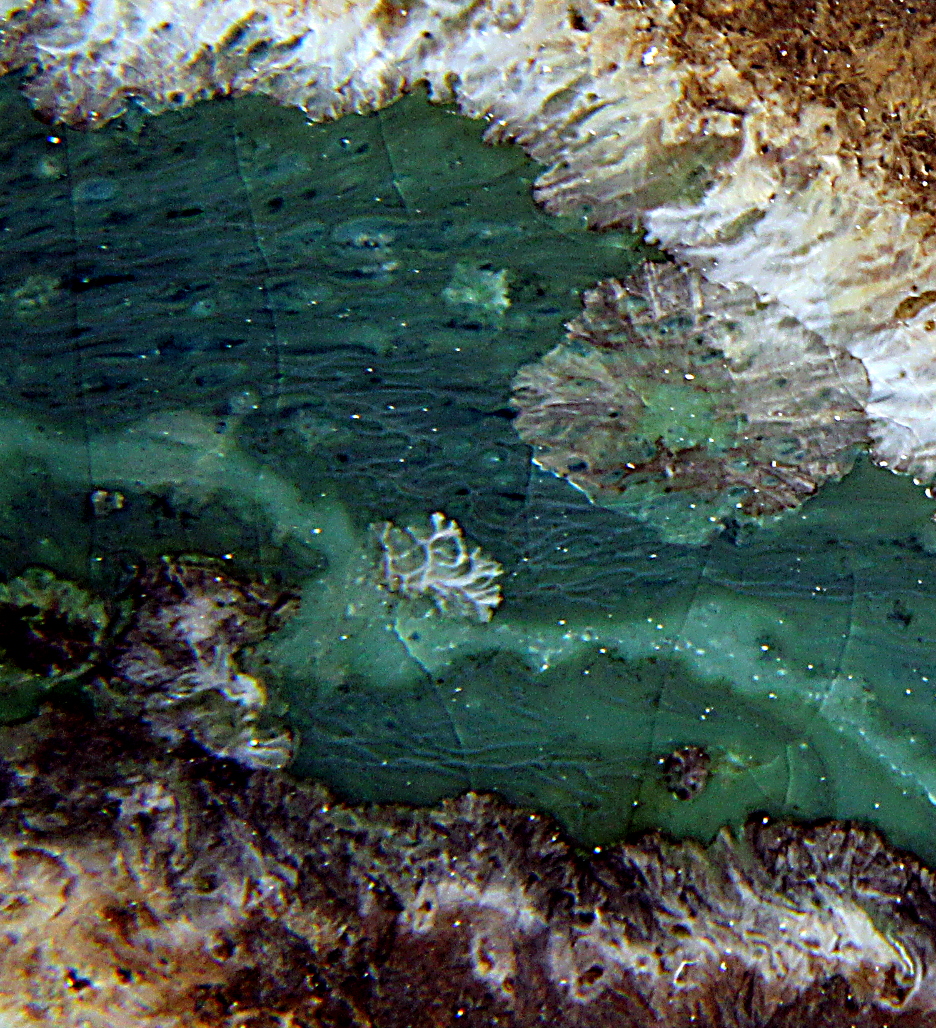
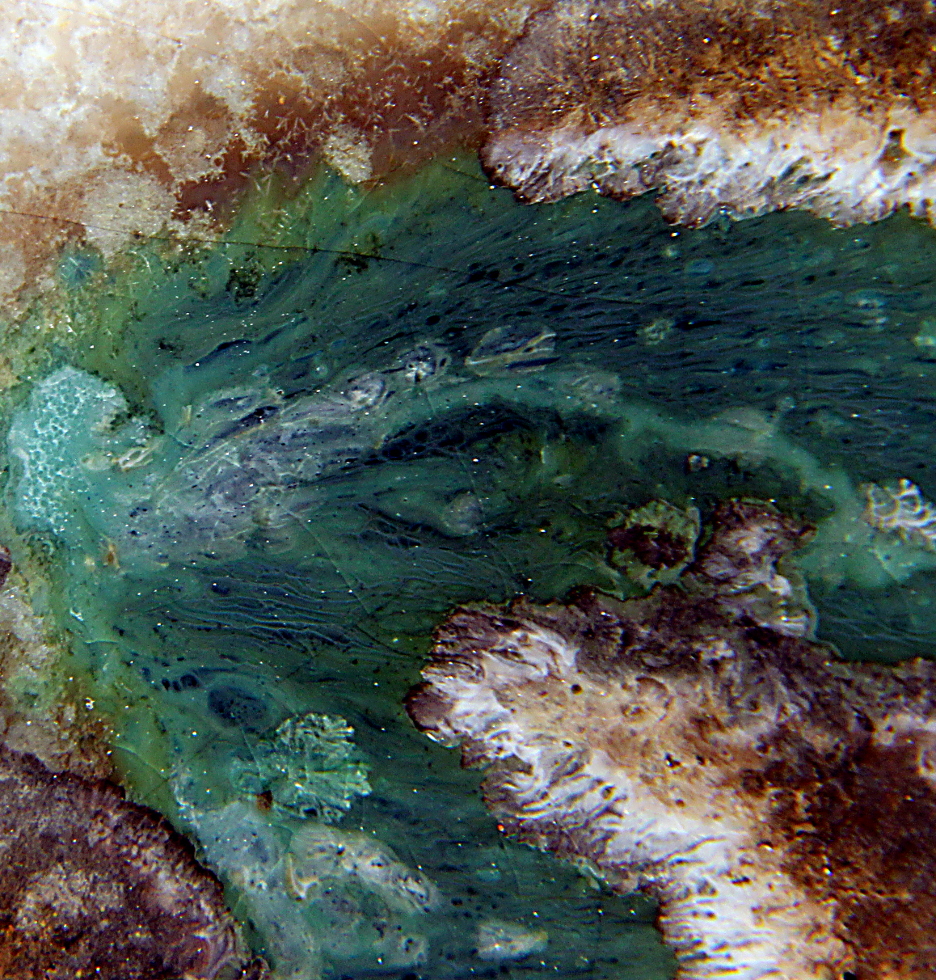
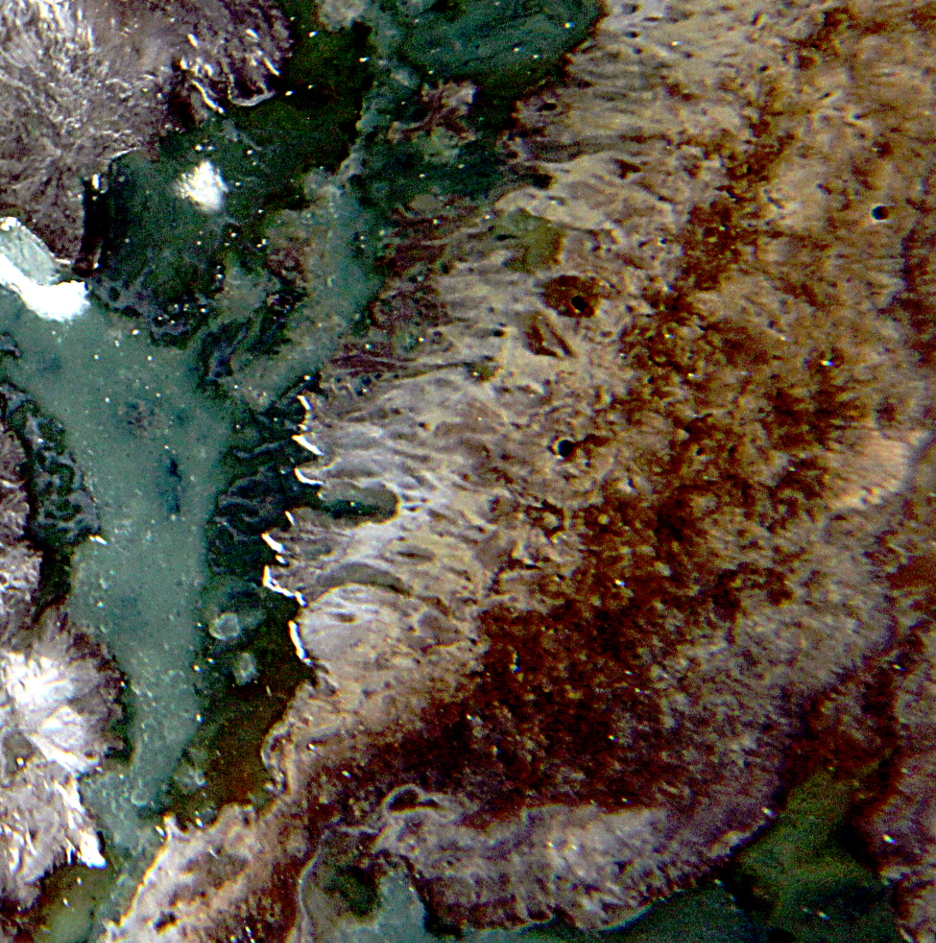
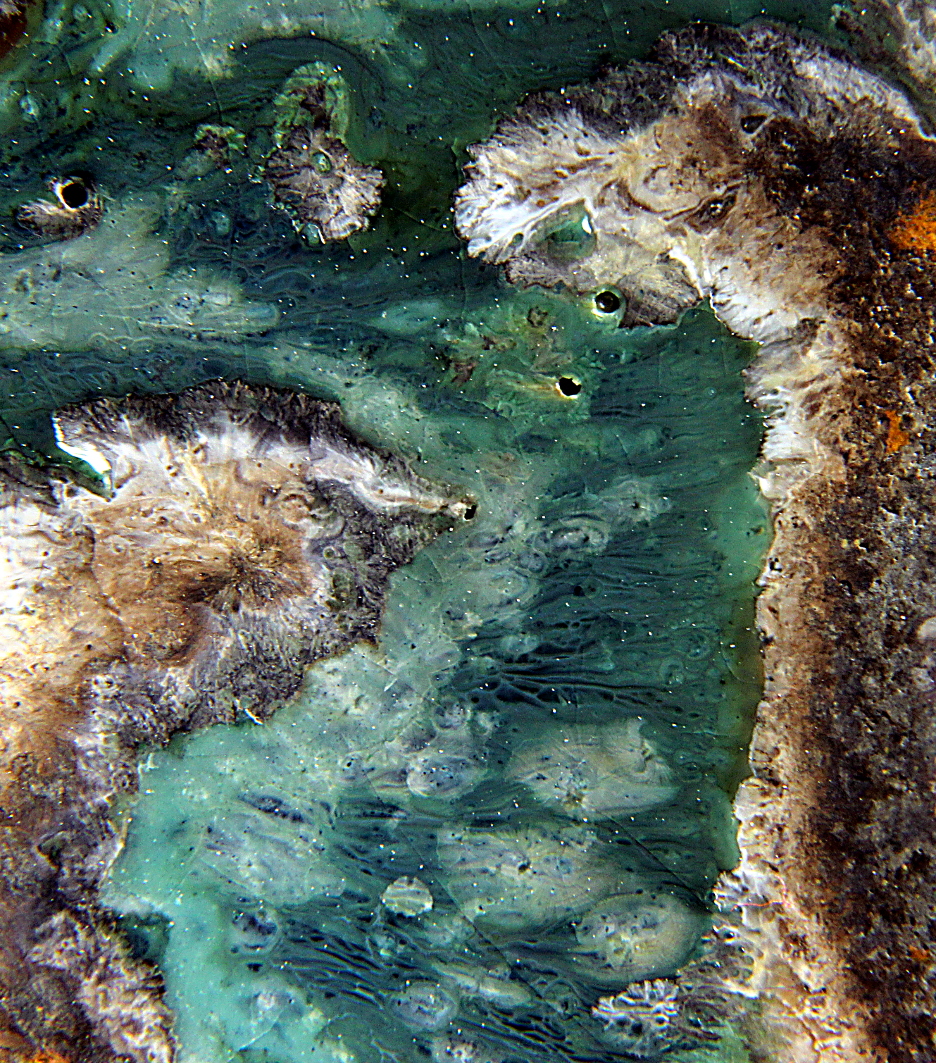
Image of the piece
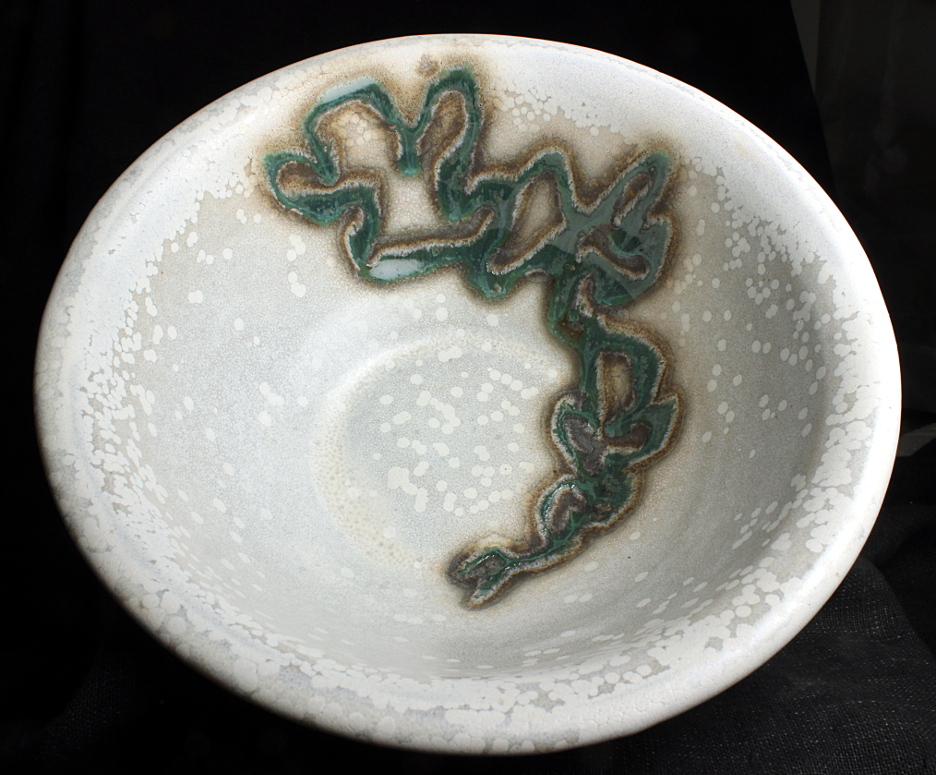
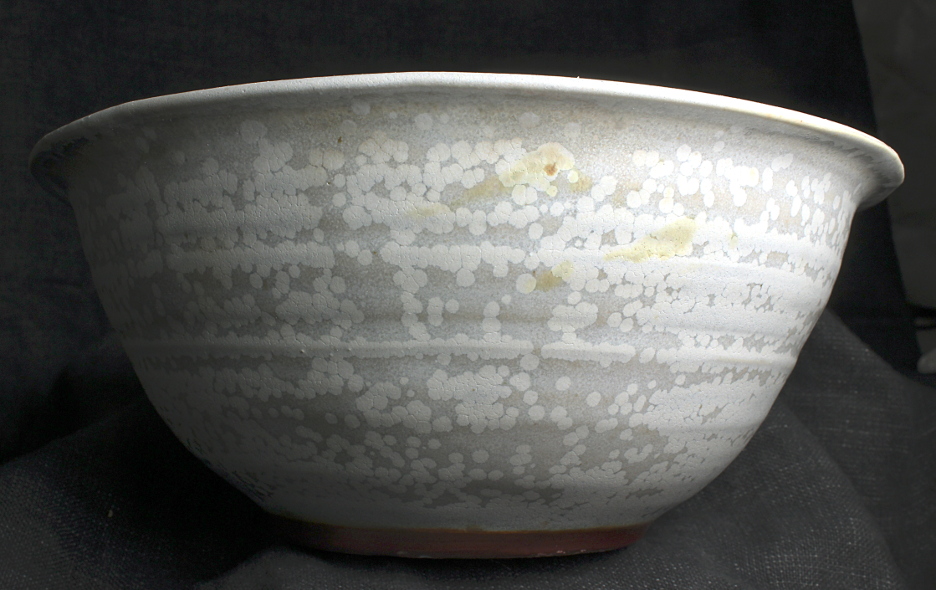
bowl with glaze hiAlk_Z3P_Z4E and inlay oribe-woof-PAl-PSiMg
bowl is ~6 inches in diameter
oxidation firing to cone 10 in an electric kiln
Firing profiles
Up Fire profile cone 10
Down Fire Profile cone 10
Clay body is a grolleg porcelain from Clay Art Center in Tacoma, WA.
glaze composition
Empirical Formula hiAlk_Z3P_Z4E :
Na2O 0.50
CaO 0.37
MgO 0.02
P2O5 0.06
TiO5 0.22
Inlay Glaze:
Empirical Formula oribe-woof-PAl-PSiMg:
Na2O 0.04
CaO 0.61
MgO 0.25
P2O5 0.01
Remarks
direction into the inlay glaze. As the inlay glaze
cools, in the same manner as sugar in tea collects
at the bottom as the tea
cools, the titanium that had diffused into the inlay glaze precipitates and
forms
that white fringe surrounding the inlay.
into the matrix glaze. In the prior examples, there
was a dense layer of titanium crystals surrounding the
inlay which absorbed
this copper and created the black ribbon like band.
pale brown halo surrounding the inlay.
less titanium migrating into the inlay,
resulting in a lower concentration of titanium crystals within the
inlay
itself and the interaction region.